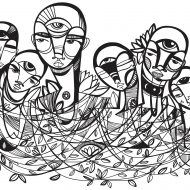
The final section in “This Bridge Called My Back” details the experiences of feeling different or “alien” in this world, and using those feelings as strengths to create a unified feminist movement. The section includes short essays and poems that illustrate the knowledge and experiences that Third World women can use to fix the current feminist movement. The first essay had a quote that resonated with me: “Words are not enough. We must perform visible and public acts that may make us more vulnerable to the very opressions we are fighting against. But our vulnerability can be the source of our power – if we use it.” It was not only motivating, but made me realize that I need to do more personally to be a part of the movement. I can talk to people or post on social media, which aren’t inherently unhelpful, but a real impact will be taking action in my daily life.
Another essay that moved me, but this time on more of an emotional level, as Gloria Anzaldua’s essay about her mother. Her struggle to write an essay that paints her mother as the villain when, she too, was a victim was incredibly emotional to read. I feel as though this must be a feeling many women can relate to on different levels. As a white woman, I can remember my mother pressing patriarchal values on me, such as the one time she yelled at me for hanging out with a group of boys because people would assume I was a slut. However, as third world women face many more oppressions than me, there are many more oppressions that can be passed down and reasserted on their children.

I really like the quote that you shared from the section’s introduction. It reminds me of the conversation that we were having in class last week about how Women’s Studies could encourage us to do more and be more action-based, rather than just read theory. I thought a lot of the readings from this book were good about not just acknowledging that the way the world operates is a problem, but they offered a more instructive outlook on how change can occur.
I think what you highlighted about the passing on of oppression and difficulties in already oppressed groups is really important. I too am a white woman with a white mother, but we still fall in the oppressed group of women and while my mom would fall more into the feminist camp in a lot of ways, she would still ask me if my outfits were “too sexy”. I think it’s really hard for oppressed groups especially those who are oppressed on multiple levels, like gender and race, to not pass some of the oppression they experienced because it is so deeply ingrained it just becomes part of how people think.