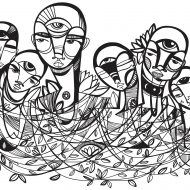
Part 3 of The Revolution Starts at Home, “(re)claiming body, (re)claiming space”, touches on themes of guilt and performance when detailing cycles of abuse, as well as on the empowerment that comes from establishing boundaries and asserting a right to space and bodily autonomy. This section highlighted inter-community abuse and the silence that surrounds it, as well as the complications that arise in trying to navigate it, which is significant as often it feels like the conversation around abuse fails to consider how it manifests within feminist and activist communities — just as it does in other spaces. The first essay in this chapter, “Without My Consent” by Bran Fenner, argues that while community call outs are appealing, this ultimately can “stunt the perpetrators growth process, creating a false sense of relief for the person (and community) wronged.” (157). What is centered here is not the feelings of the perpetrator, but rather the well-being of the community as a whole.
Moreover, Fenner emphasizes a dedication to “transforming our interpersonal dynamics” (158) and communication – rather than relying on isolation – as a means to disrupting the silence and cycle of abuse in the community. These concepts and complications that can arise are highlighted in other essays throughout this section, like N.’s essay “A Sliding Stance”, where the author details the tensions and conflicted feelings they have – especially with control (164) and also with the involving of law enforcement – when describing their seeking of a peace order against their partner.
Another piece in this section that stuck out to me was Leah Lakshmi Piepzna-Samarsinha’s poem “When Your Parents Made You”. Specifically, I like how this poem looks at how violence and trauma contribute to cycles of abuse, but also how this doesn’t excuse the abuse continued by the person affected and doesn’t center their experience alone as being the ultimate point of reference/doesn’t take away the right of the person experiencing abuse from them to tell their own story.

This section of the book was very raw and passionate and I enjoyed reading each individuals pieces. I like that you point out “themes of guilt and performance when detailing cycles of abuse,” and “the empowerment that comes from establishing boundaries and asserting a right to space and bodily autonomy.” Each piece in this section told a different story but had a streamline of similarities to reclaiming themselves and their bodies and no longer allowing themselves to be put through the abuse that they had been through for so long. The struggle to do this was not sugar-coated however, and it made you realize that simply saying that you will no longer live in a state of fear and guilt is much easier said than done. I especially liked the piece by Leah Lakshmi Piepzna-Samarsinha and her last line “You tell your own story I hear a second hand where you say you just slapped me once Me sweetheart, I tell a different story.” I look forward to discussing this section in class today.
I really like your response to how abuse needs to be addressed by the whole community. I like how this book and last weeks readings emphasize the community as a whole, and that any individual abuse should also be considered violence against the community. Going along with that, both of these books have offered really productive and accessible ideas for solutions, in that we should all be striving continuously to be accountable to our own actions and to encourage the community to be accountable. Like you emphasized in your response, this is important for both victims of abuse and perpetuators.