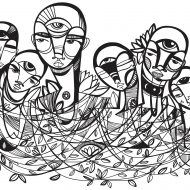
This story is about a city by the sea called Omelas, a utopian city of happiness. It begins with the Festival of Summer and the events that were occurring as a result; the town was decorated, music was playing, horses were racing, children were playing, food was being served, flowers were blooming, and the people were spectacularly happy. However, there was a catch. The narrator asks if I, the reader, believe in such a joyful town and occasion. In order to make this idealistic society seem a little more realistic, they introduce the town’s dark side. In the basement of a public building in the town, is a small closet with a locked door, where a child is being kept. It isn’t a secret and some have even come to see it. Though it can be found as upsetting, the townspeople take it as a sacrifice and attribute their happiness to the suffering of one. This allows most of them to move on with their happy lives. Some, however, are not able to do this. They can’t accept the truth of the situation and ultimately end up leaving. These are “the ones who walk away from Omelas.”
This story took an sudden, yet anticipated turn. Obviously such a perfect situation would have a negative trade-off. The way that some of the members of the community couldn’t take this compromise and instead, just left, seemed to be counteractive. They were so complicit in the institution that made up the city, that rather than doing anything to help the child or to change the situation, they just left. It was so deeply ingrained that they chose to just leave, rather than to seek out others who were also disturbed and start a movement for the liberation of this innocent child.
This was clearly a representation of our society and the lack of participation by many in social movements, though the disparities are clearly existent. The comfortability involved in conformity is more important to people than fighting the systems that do not allow this this comfortability uniformly to everyone who exists in the society. Those who do see the harm that is being done, are portrayed as lost and unaccompanied in order to invalidate their concern, and therefore to maintain the current system that we live under.

I agree with you how this was clearly a representation of our society and the trade offs especially within a unitarian mind-set. Sadly, the suffering of the few is justified by those trying to deliver the greatest good for a higher number.