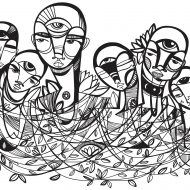
Blood Under The Bridge

This piece is reflecting on Rubin’s work Thinking Sex. It starts with a description of the Barnard Sex Conference and the academic history of discussing pornography. The conference was protested by a group of antipornography activists who handed out leaflets. The major theme of the conference was, ironically, how sexuality is both a means for pleasure and a source of danger for women. The intervention in this piece is for Rubin’s own work, Thinking Sex, which she has chosen to rethink for a new conference. There are things she would change from her original piece, including her remarks about transsexuality, sex work, and the sexuality of the young. Rubin refers to transsexuality and sex work as “inconvenient facts” in that they reveal the limitations of the theoretical models and conceptual distinctions developed in Thinking Sex. She acknowledges critiques she received for the things she wrote about each of these topics, and recognizes the truth of these critiques and the incorrectness of her original piece, and all of the things she would change now if she could.

In all honesty I really struggled with reading this essay due to the length and subject matter. For much of it, I was not super interested in the reflection on the Bernard Sex Conference and the history of who was for or against porn. I found the material to be dry and dull for much of it, and I did a lot of skimming. It wasn’t until the last 10 pages or so, when she begins to directly address the ways she would change Thinking Sex that I started to get more interested in what the article was saying. I found her acknowledgment of the misgivings of her past writing to be very interesting. Reading her self reflection and hearing how her opinions have grown and changed with her access to new information and the changing of the times is something that fascinates me. It also makes me think very briefly of cancel culture, since celebrities recently keep having the problem of people digging up old problematic things that they said 10 years ago and have since apologized for. Here Rubin is writing very candidly about the errors of her past writing and what specifically contributed both to her views when the piece was originally written and what lead to certain changes now, which is something that really speaks to me.

I think something interesting to talk about in class, on top of the discussion of how do we feel about porn in relation to the feminist movement, is about this acknowledgement of outdated views and updating them. I want to know what everyone else thought about this.

Coming to Power: Writings and Graphics on Lesbian S/M

Coming to Power is a collective book containing excerpts of multiple individual’s thoughts, experiences, or fantasies of Lesbian S/M. The book started out with an introduction that laid out what was to be expected of the book as a whole and the tremendous struggle that each of the publishers had on deciding what the book should contain. Lesbian S/M is a very controversial topic in the feminist movement. The introduction states, “In the public arena of the lesbian, feminist, and gay press, positive feelings about S/M experiences have been met for the most part with swift negative reaction and authoritative reprimands.” It goes on to explain the difficulty that individuals face with S/M because of the power dynamic instilled within the act that is reflective of the patriarchy and abuse toward women.

The first entry titled “Reasons” depicts a very vivid scene of two women partaking in S/M sex. The writer, Barabara Rose, describes the scene as erotic and enjoyable. She makes it known that every act being performed is consensual and encouraged. She paints S/M how she views it—an erotic exploration that is performed for the pleasure of each partner. The next entry entitled “Taking The Sting out of S/M” talks about the controversy around the act and the ways in which it should be defined. The writer, Kitt, states “there is a full spectrum in the diversity of S/M practices, such as tying with silk scarves, slapping, bondage, or whipping. All of it involves playing with the issues of power and control. And I mean playing in the full sense of the word.” She goes on to explain that S/M is an uncomfortable topic, just as the topic of lesbians had been, but with time it will progress to be more comfortable. She also included safety tips for performing S/M which I very much enjoyed because unlike a lot of theoretical feminist pieces, as we have discussed, this provides some answers as to what to do next. The final entry entitled “Report of a Conference on Feminism, Sexuality and Power: The Elect Clash with the Perverse” explains the conflicting thoughts on S/M in the women’s movement that was displayed during a conference at Mount Holyoke College. The topic overtook the conference with viewpoints from anti-S/M groups, who believed it perpetuated violence against women as well as patriarchal problems, pro-sex groups, who believed S/M was just sexual freedom meant to be expressed, and those who were unenthusiastic about the topic, which included the writer of the piece. As a neutral listener to the debate, writer Margaret Hunt was able to take in both sides of the topic and form her own views. At the very end of the piece, it was clear where she stood on the issue. She responds to speaker Sheila Jeffery’s remark: “personal freedom is not the sort of concept that would fit into my view of what we can do around sexuality,” by saying “this is not my revolution.”

This reading was very interesting to me because it tackled a topic that is not discussed very often. Like Margaret Hunt, I had no strong opinions for or against S/M. I was dragged back and forth throughout the readings as to where I stand with the issue. On one hand, I can see where anti-S/M groups are coming from. The act of S/M can be portrayed as violent or abusive and reinforce power dynamics that women work hard at depleting. However, on the other hand, I believe in sexual freedom and exploration as long as there is full consent from each individual. Like Hunt, I lean more toward pro-S/M and I believe that as long as each individual is respected and has given full consent, then there is little room for outside constrictions.

Post class reflection 2/28

Thursday’s class was different from the other classes we have had so far this semester and I really enjoyed it. I felt like there was a lot of interaction from everyone in the room and it was interesting to hear everyone’s take on the book. We discussed each section from beginning to end and you could see how the book followed a bit of a timeline, although all of the pieces were individual and didn’t necessarily fit together. I did not recognize this progression when I first read, but as we discussed it became very clear. I liked hearing from students whose sections I did not read, as well. It was interesting to hear their take on their section and what they thought of each piece. I liked to hear about the parts that stuck out to them and why it was so significant to them. I also liked sharing my own section because I was so excited about the material in it and I couldn’t wait to share the parts that were most memorable to me. A lot of topics were brought up in response to some of the pieces, particularly the piece which depicted white women from a negative viewpoint. As a predominantly white female classroom, this topic was very interesting and brought up a lot of conversation. It was nice to hear everyone’s different reactions and thoughts on the piece. I believe we had a very good and thorough discussion around it and had a better understanding of what the author intended. All in all, I really felt that this class was more interactive and everyone had a lot to say about what they read and what they took away from the book.

Section II: Entering the Lives of Others

Theory in the Flesh

The second section consists of poems and short essays about marginalized people, especially women of color, experiences of their oppression and pain. “A theory in the flesh means one where the physical realities of our lives — our skin color, the land or concrete we grew up on, our sexual longings — all fuse to create a politic born out of necessity.” The authors use their own experiences and the understanding of the “flesh” of their people from the forced encampment of Indigenous people, Japanese-Americans, and mothers as laborers to demand a collective understanding of solidarity within their communities.

It is no surprise that “Invisibility is an Unnatural Disaster: Reflections of an Asian American Woman” by Mitsuye Yamada is the most compelling and relatable essay for me. Yamada reflects the double invisibility among Asian Americans, and how we have been oppressed and stereotyped as a “silent” struggle. Yamada urges us to speak out and defy the cultural codes of being silent. Through my experiences, I never said much about the racism and the bullying towards me. Like Yamada, “I would ‘let it go’ because it was pointless to argue with people who didn’t even know their remark was racist. I had supposed that I was practicing passive resistance while being stereotyped, but it was so passive no one noticed I was resisting; it was so much my expected role that it ultimately rendered me invisible.” From lack of practice, my voice is weak; however, I try to raise my voice a bit more each day, especially when it makes people say, “this is so uncharacteristic for you.”

This Bridge Called My Back, section IV: Between the lines

On culture, class, and homophobia.

The fourth section of A Bridge Called My Back collects short essays and a few poems that serve to highlight not only the experiences shared between Third World Women but also the differences between them. The chapter is about finding strength in a bond even when there is no connection. A quote that resonated with me from the introduction of the chapter is “Here we begin to fill in the spaces of silence between us. For between the seemingly irreconcilable lines–the class lines, the politically correct lines, the daily lines we run down to each other to keep difference and desire at a distance–the truth of our connection lies.” It is so important to recognize the differences between us, because without this acknowledgment we cannot come together as feminists to make change for all women. Third World Women cannot just be lumped into that one category without exploring the nuances between their cultures and subsequent needs out of the feminist movement. It is in the consideration of these differences that the movement can strengthen, and so can our bond as sisters.

Another section of this chapter I found particularly impactful is the “Letter to Ma,” by Merle Woo. “Do you see your repressed anger in me?” Is something she asks her mother in this letter, and it floored me. I think there’s something so relatable about that question. As daughters I feel like we inherit our mother’s anger and trauma, at least more than son’s might. This aspect in the relationship between mothers and daughters almost feels essential despite being subconscious, and resonates as something I’ve experienced with my own mom when we talk about certain issues. Maybe she can’t listen, or she won’t listen, because like Woo asks, “what doors would groan right open if you heard my words with complete understanding? Are you afraid that your daughter is breaking out of your shackles, into total anarchy?” (138). The shackles were possibly placed there by her mother, but they are also the ones that keep her mom tied up as well. We deal with the same issues, but the intergenerational gap feels occasionally too large to overcome. But in the end we love our mothers, and they remain beautiful and important to us. If we can better understand our relationship to each other as well as our relationship side by side to the oppression we face, it would help.

This Bridge Called My Back Section 6: El Mundo Zurdo

The final section in “This Bridge Called My Back” details the experiences of feeling different or “alien” in this world, and using those feelings as strengths to create a unified feminist movement. The section includes short essays and poems that illustrate the knowledge and experiences that Third World women can use to fix the current feminist movement. The first essay had a quote that resonated with me: “Words are not enough. We must perform visible and public acts that may make us more vulnerable to the very opressions we are fighting against. But our vulnerability can be the source of our power – if we use it.” It was not only motivating, but made me realize that I need to do more personally to be a part of the movement. I can talk to people or post on social media, which aren’t inherently unhelpful, but a real impact will be taking action in my daily life.

Another essay that moved me, but this time on more of an emotional level, as Gloria Anzaldua’s essay about her mother. Her struggle to write an essay that paints her mother as the villain when, she too, was a victim was incredibly emotional to read. I feel as though this must be a feeling many women can relate to on different levels. As a white woman, I can remember my mother pressing patriarchal values on me, such as the one time she yelled at me for hanging out with a group of boys because people would assume I was a slut. However, as third world women face many more oppressions than me, there are many more oppressions that can be passed down and reasserted on their children.

Post Class Reflection: 2/21

One of the things I reacted to most strongly during this week’s class period was the very end question. “If we could use our studies in conflict to reimagine our program, what would (and what wouldn’t) we change?” I really liked this question because I really like focusing on practical applications of the things we discuss in class. I think figuring out ways to improve the Women’s Studies department is a great step towards effecting more change, since if we’re learning about broader issues in class like trans national feminism or trans issues it will help raise consciousness and make Women’s Studies spaces more inclusive.

There should be room in Women’s Studies departments for activism in education as well as theoretical, academic works and people’s own anecdotal experience (though in my opinion the latter should be used more sparingly–while anecdotes are important, and Women’s Studies can be a great place to share them, for learning purposes I think it’s better to focus more on academic research or theory). Also I think it would be interesting to find room for research opportunities in Women’s Studies. While departments can be limiting, I think Women’s Studies still has a lot of room to grow and expand both in content taught and methods of teaching.

Getting Disciplined: What’s Trans* About Queer Studies Now by Cael M. Keegan

Cael M. Keegan writes “Getting Disciplined: What’s Trans* About Queer Studies Now?” as a follow up to “What’s Queer about Queer Studies Now?” by David Eng, Jack Halberstam, and Jose Esteban Munoz. Trans studies, as a field, becoming a recognized and legitimized in the academic world over the past 10 years. However, there are still several roadblocks and struggles it has in finding its “home” in the academic world. For example, women’s studies and queer studies are becoming more formalized due to pressure from universities, causing trans studies to face political barriers. Trans, as a concept, is still under heavy criticism and therefore the field of trans studies tends to be taken less seriously than women’s studies and queer studies. Furthermore, in queer studies it is understood that gender, sexuality, and identity as “effects of normative power,” however, trans studies students may feel that gender is an innate experience and queer studies does not entirely support that. As a cis person, I found this article quite enlightening because there were many examples in gender studies that I never truly realized were trans-exclusionary. I am interested to better understand and learn more about trans studies and its role in women’s studies and queer studies.

What Has Happened Here by Barkley Brown

The purpose of this piece by Elsa Barkley Brown is to point out the way feminist historians, and the fact that the majority of them are white women, aren’t going to impact the systems and oppressions they wish to if they continue trying to see history through the lens of gender, specifically “women”, without acknowledging the race, economic status, sexuality, and other circumstances that make up these histories. Barkley Brown points out that the two main fears of these feminist historians is that there will be a problem of “too many identities” and that this will lose the “voice of gender”. 

            The experiences of African American, Latina, Asian American, and Native American women are seen as “other” and white middle class women as the norm. By both ignoring these identities existences as unique, while all occurring simultaneously with overlapping experiences or circumstances, ignores and splices history up into separate categories that make it impossible to make large scale change. These ideas ignore the reality of most women’s and people’s experiences, which then keep intact the exact institutions that feminist are seeking to break down. 

            Barkley Brown does an amazing job comparing the reality of experiences to the likeness of jazz, all happening simultaneous while each being unique, with classical music which can only be played in one way, conducted by one person, with everyone else being completely silent. This is such an amazing way to show the one-sidedness and failure of gender history in it’s current state of being centered around white middle class women and then not seeing why larger changes haven’t and can’t be made. By excluding voices and experiences “women’s history” and feminism can’t move forward. A really good point, and in an oversimplified way sums up the piece, that Barkley Brown points out is that “we have still to recognize that all women do not have the same gender (p.300).” 

For and About Women

I always enjoy reading about the origin of Women’s Studies because I feel like I always view it in a new lens. These readings are usually assigned in the beginning of the semester, so it is an interesting gauge on how much I have grown as a feminist since the last time I had read about it. As a freshman in an intro class, I was seeing through rose-colored glasses and thought it was such an incredible story of women empowering women. After that, I learned how to be more conscious. I learned about the role that intersectionality played and that white women were not so empowering or inclusive after all.

This time, I looked at it from a feminist conflict perspective and took our readings from the last few weeks into account. One reading from last week, The Tyranny of Structurelessness, was mentioned. It was transcribed from a speech given in 1970, around the same time as the events being discussed by Boxer in this article. Joreen discussed how the women’s movement was organized on the idea of structurelessness, meaning there was no leaders or hierarchies. This resulted from opposition to the structuredness of society. She reports that though formal structures were nonexistent, informal structures existed and the confusion that resulted impeded on the movement itself.

A quote from page 667 in Boxer’s article reads, “The double purpose of women’s studies to expose and redress the oppression of women-was reflected in widespread attempts to re-structure the classroom experience of students and faculty. Circular arrangement of chairs, periodic small-group sessions, use of first names for instructors as well as students, assignments that required journal keeping, ‘reflection papers,’ cooperative projects, and collective modes of teaching with student participation all sought to transfer to women’s studies the contemporary feminist criticism of authority and the validation of every woman’s experience.” This lack of leadership is an example of the structurelessness that Joreen discusses. The Women’s Studies movement was still under construction, so many took it into their own hands to discover what the best method of teaching and learning was, despite the consequences of the confusion. She mentions that the movement disagreed on various academic and political goals. It’s interesting because the origin story of Women’s Studies is always portrayed as a liberating time, but the more I learn, it seems that it actually only was for the women in charge of it. Obviously in regards to exclusion based on race, class, and sexuality, but also for the students actually learning. There was a lack of cohesion in the informal leadership, which surely affected the quality of education that the students received. This seems that it would be counteractive to the original movement by putting their own interests above the students and definitely signifies a feminist conflict.